
Restoration
Pulpotomies (Baby Root Canals) in Tewksbury, MA
Gentle, effective treatment to relieve pain and save baby teeth.
When deep decay or infection reaches the nerve of a baby tooth, prompt treatment is essential. A pulpotomy allows the tooth to be saved while eliminating pain and infection. At Pediatric Dentistry and Beyond, pulp therapy is performed with a calm, child-centered approach designed to keep kids comfortable and confident.
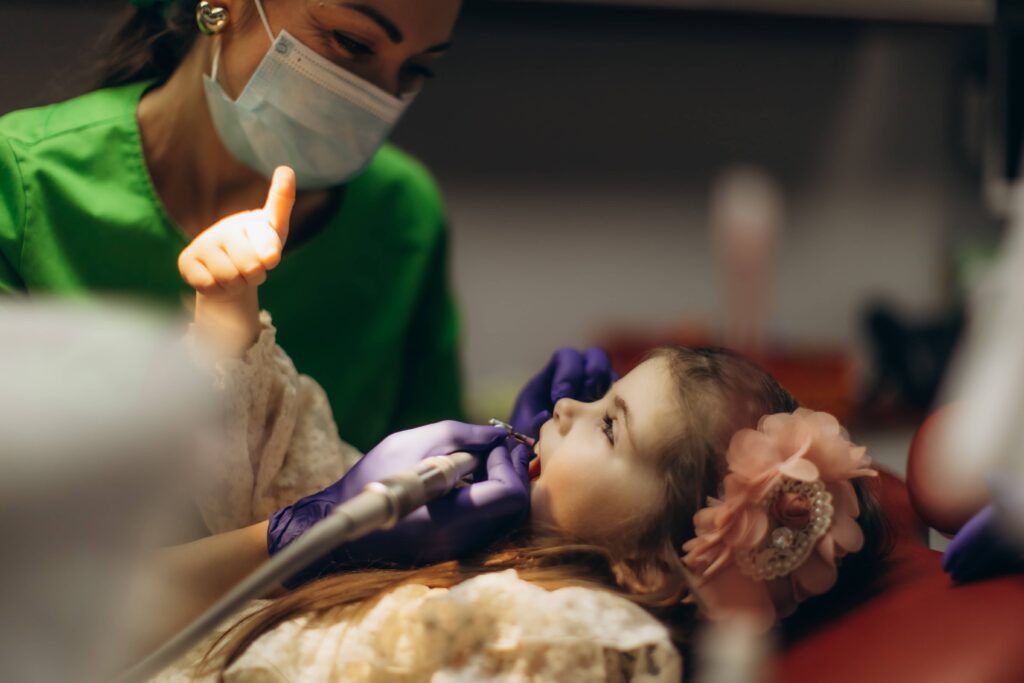

Pulp Therapy
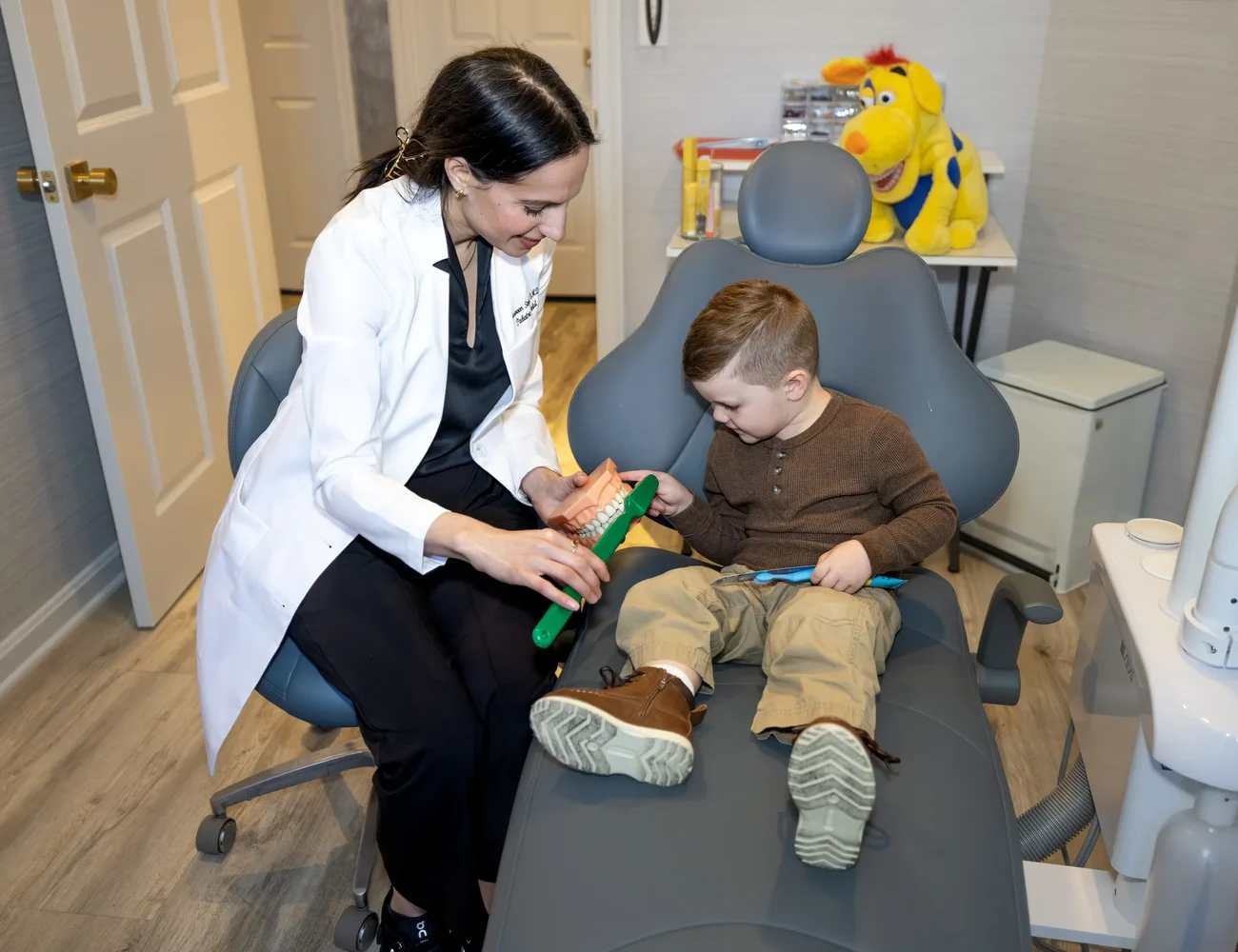
What Is a Pulpotomy?
A pulpotomy is a common pediatric dental procedure that removes infected or inflamed pulp tissue from the crown portion of a baby tooth while leaving the healthy roots intact.
Instead of extracting the tooth, pulp therapy allows us to preserve its structure so it can continue guiding proper chewing, speech, and development of permanent teeth.
Why a Pulpotomy May Be Needed
- Deep cavities that reach the nerve.
- Repeated decay in the same tooth.
- Dental trauma such as a crack or impact injury.
- Tooth pain or swelling indicating infection.
Is a Pulpotomy Painful?
No. The procedure is performed using local anesthesia, and most children remain comfortable throughout the visit. Dr. Jasveen Singh uses gentle techniques, quiet instruments, and clear, child-friendly explanations to reduce fear and anxiety.
- Comfort-focused numbing
- Low-vibration, quiet tools
- Parent presence when helpful
- Breaks, distractions, and sedation options if needed
What Happens During the Procedure?
Most pulpotomies are completed in a single visit and follow a predictable, efficient process.
- The tooth and surrounding area are gently numbed
- Infected pulp tissue is removed from the top of the tooth
- A medicated material is placed to soothe and protect the remaining pulp
- The tooth is sealed and restored with a protective crown
After treatment, children often feel immediate relief from pain and can return to normal activities the same day.
Why Saving Baby Teeth Matters
Preserving baby teeth helps prevent early tooth loss, which can lead to crowding, bite problems, speech difficulties, and the need for orthodontic treatment later. Pulp therapy allows your child to keep their natural tooth until it is ready to fall out on its own.
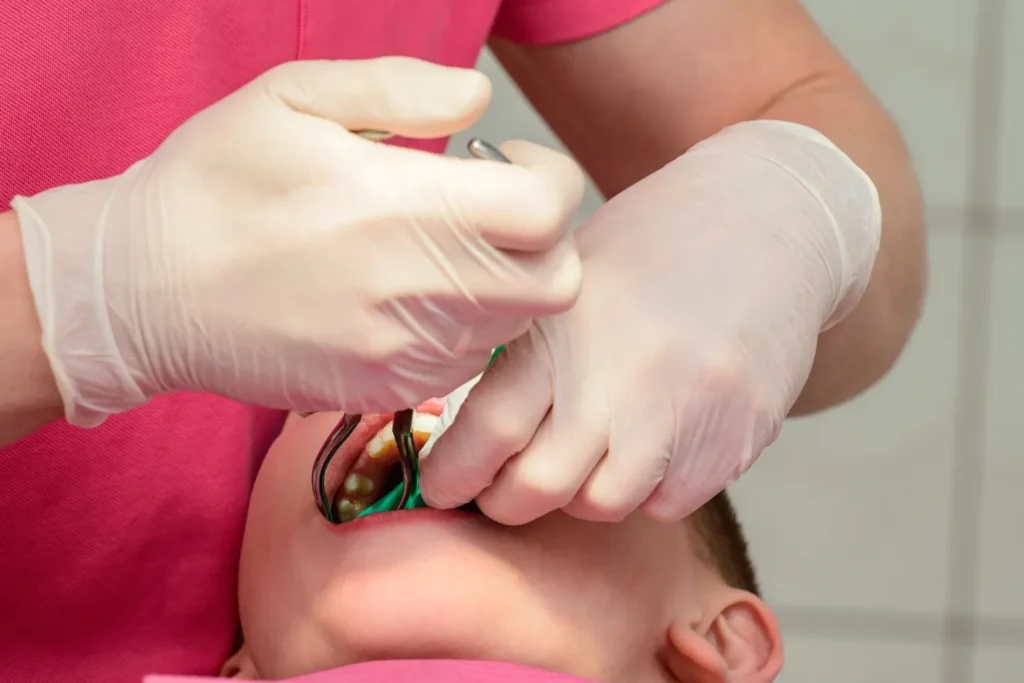
Pulp Therapy FAQ
- What is the difference between a pulpotomy and a root canal?
- A pulpotomy removes only the infected pulp from the crown of a baby tooth, while adult root canals treat the entire root system.
- How long does a pulpotomy take?
- Most procedures are completed in one visit, usually within 30–45 minutes.
- Will my child need a crown afterward?
- Yes. A crown is typically placed to protect the treated tooth and restore strength.
- Is pulp therapy safe for children?
- Yes. Pulpotomies are widely used in pediatric dentistry and have a long record of safety and success.
- What happens if the tooth isn’t treated?
- Untreated infection can worsen, cause pain, and affect the development of permanent teeth.
- Can my child eat after the appointment?
- Most children can eat normally once numbness wears off, following any instructions provided.
- How do I know if my child needs a pulpotomy?
- Signs include persistent tooth pain, swelling, sensitivity, or a deep cavity seen on X-rays.
- How do we schedule an appointment?
- Contact the office to schedule a visit and discuss treatment options with our team.